Analysts and investors can use this information to ensure that the company is growing each year and producing a net income (rather than loss). The statement of shareholders’ equity may intimidate some small business owners because it’s a bit more complicated than other financial https://www.bookstime.com/ calculations. However, in simplest terms, it’s essentially what your organization has earned that remains in the business. Let’s create the statement of stockholders’ equity for Cheesy Chuck’s for the month of June. Since Cheesy Chuck’s is a brand-new business, there is no beginning balance of retained earnings. The items to account for are the increases in value/equity, which are investments by stockholders and net income.
Why the Statement of Owner’s Equity is Often an Afterthought
- He has been a manager and an auditor with Deloitte, a big 4 accountancy firm, and holds a degree from Loughborough University.
- Together these components represent the net worth of the company attributable to shareholders at a specific point in time.
- It shows how profit or loss, dividends, share issuance, and other transactions affect the business’s equity.
- The statement of shareholders equity forms an indispensable part of a company’s financial statements.
- A dividend is the amount of money paid per share of stock that is not always the same as the profit.
- Each of these elements plays a distinct role in reflecting the financial health and capital structure of the company.
These items impact equity but are not included in net income until they’re realized. This Statement of Shareholder Equity, when provided alongside other financial statements, gives shareholders a comprehensive view of how their stake in the company has evolved over the period. The Statement of Shareholders’ Equity often includes details about stock options and other equity-based compensation. This helps you understand how much of the company’s equity is tied up in options, which can impact overall shareholder value and future earnings.
Changes in the UK Spouse Visa Cost 2025: What Has Changed, and How Might Families Save Some Money?
Examples include foreign currency translation adjustments and unrealized gains or losses on certain investments. Ownership changes can significantly impact the company’s capital structure. Issuing new shares can dilute existing ownership percentages but may raise additional capital for business growth. Conversely, share repurchases can consolidate ownership but require the company to use its resources, potentially affecting liquidity. A stock split increases the number of shares statement of shareholders equity outstanding without changing the overall value of equity.
How does a stock split impact the statement of stockholders’ equity?
- Statement of Changes in Equity refers to the reconciliation of the opening and closing balances of equity in a company during a particular reporting period.
- This figure provides stakeholders with a clear picture of how equity has changed over the period.
- Profit and loss statements, accounts receivable aging reports and cash flow statements are just a few of the essential documents necessary for planning growth and staying on top of money matters.
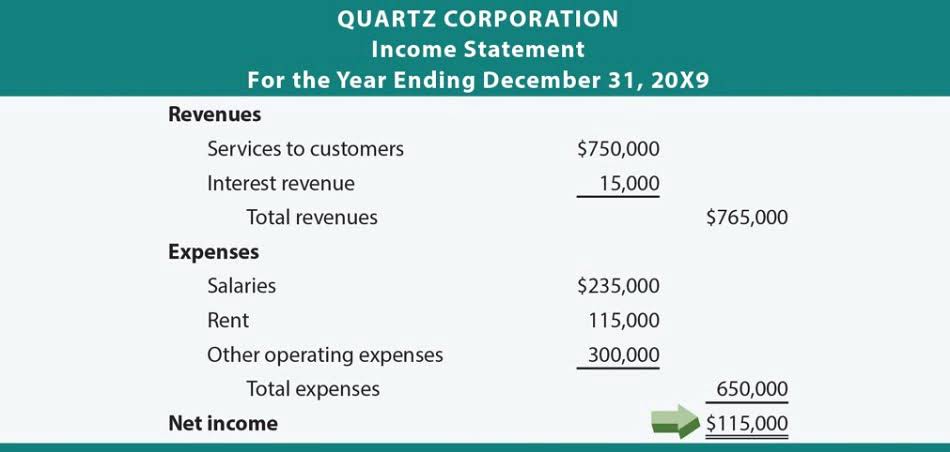
- When Expenses are greater than Revenues, a company has a Net Loss (Loss).
- A stock split increases the number of shares outstanding by issuing more shares to existing shareholders, while a reverse stock split reduces the number of shares outstanding.
- Put simply, a statement of shareholders’ equity is part of a company’s balance sheet that provides investors with a quick description of the company’s performance.
It represents the additional amount an investor pays for a company’s shares over the face value of the shares during a company’s initial public offering (IPO). Outstanding shares are also an important component of other calculations, such as those for market capitalization and earnings per share (EPS). The job of the Statement of Shareholders’ Equity is to tracks changes in the equity for all owners.
The issuance must comply with state corporate law and federal securities regulations. When shares are issued for non-cash consideration, the transaction is valued at the fair market value of the stock or the consideration received. This closing process is a fundamental requirement of the accounting cycle. Net Income represents the increase in the company’s net assets derived from profitable operations during the period. The Statement of Shareholders’ Equity is fundamentally a movement schedule detailing how the aggregate account balances change over a defined period.
Emotional Biases in Investment-The Effect of Feeling on Financial Decisions

It tracks how equity changes from year to year, showing things like new shares issued or buybacks. You can see how profits are reinvested or how dividends are paid out, giving you a clear picture of how the company’s value is evolving. The statement shows how much money has been paid out in dividends, which tells you if the company is sharing its profits with shareholders. It also helps you understand the company’s approach to reinvesting profits versus returning them to investors. The Statement of Shareholders’ Equity gives a snapshot of how well a company is doing by showing changes in equity over time.
Shares repurchased by corporations become treasury shares, and their monetary value is recorded in the treasury stock contra account. Aside from stock (common, preferred, and treasury) components, the SE statement includes retained earnings, unrealized gains and losses, and contributed (additional paid-up) capital. Many investors view companies with negative shareholder equity as risky or unsafe investments. But shareholder equity alone is not a definitive indicator of a company’s financial health. If used in conjunction with other tools and metrics, an investor can accurately analyze the health of an organization.

Both preferred and common stock are equity accounts that form the share capital of the company. As the name suggests, the owners of these stocks (or shares) have a preferential right to the company’s earnings and capital (at the time of winding up). At the time of dividend distribution, the preferred stockholders are the first ones in line.

Lastly, if a company retained earnings balance sheet incurs a loss, it must be deducted from retained earnings. If the losses exceed the available retained earnings, it might eat into other areas of equity – this situation can lead to negative shareholders equity. Companies that pay dividends are effectively redistributing a portion of their earnings back to the shareholders. When dividends are paid out, they are deducted from the company’s retained earnings and therefore reduce equity.